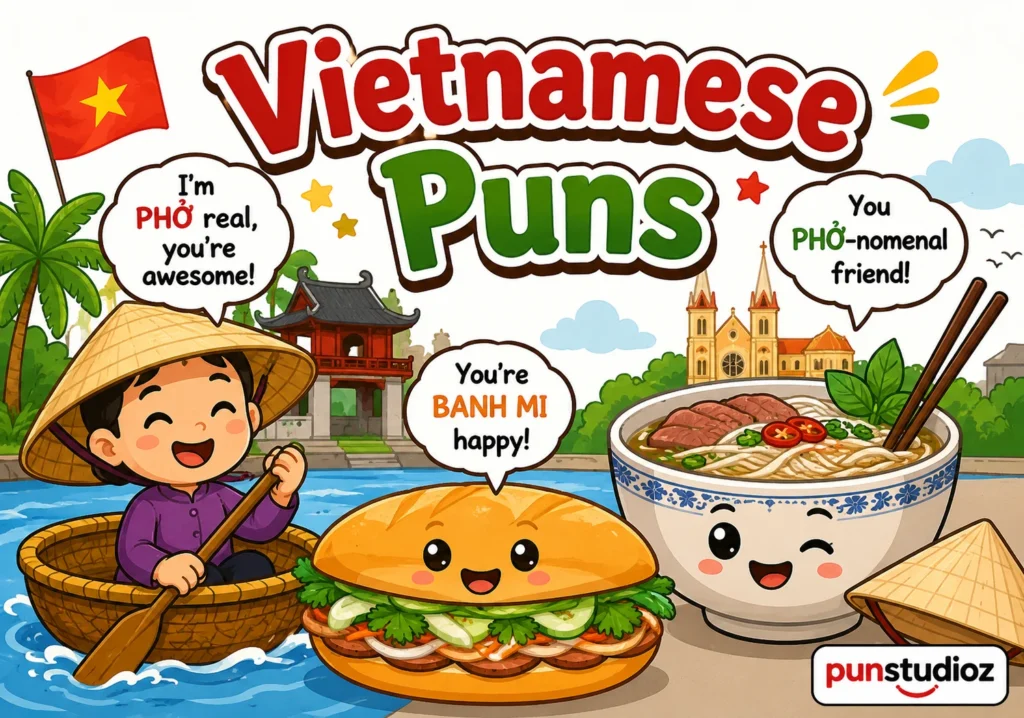
Have you ever laughed at a joke that made perfect sense to native speakers but completely confused everyone else? That’s often the magic of Vietnamese Puns. These clever jokes use similar sounds, double meanings, and cultural references to turn ordinary words into something unexpectedly funny.
Whether you’re learning Vietnamese, traveling to Vietnam, chatting with Vietnamese friends, or simply love discovering humor from different cultures, understanding Vietnamese Puns can make conversations much more enjoyable.
They reveal not only how the language works but also how creativity and culture come together through everyday speech.
Unlike simple jokes, Vietnamese wordplay often depends on pronunciation and tone. A tiny change in the way a word is spoken can completely change its meaning, leading to clever punchlines that native speakers instantly recognize.
Explores what Vietnamese Puns are, where they come from, how they’re used today, and why they’ve become increasingly popular across social media, messaging apps, and everyday conversations.
What Does Vietnamese Puns Mean
Vietnamese Puns are jokes created by playing with words that sound alike, have multiple meanings, or share similar pronunciation. They often depend on the unique tonal nature of Vietnamese, making them especially clever and entertaining.
Many Vietnamese puns combine language, local traditions, food, family sayings, and popular culture into jokes that are both funny and meaningful.
Quick Answer
Vietnamese Puns are humorous wordplays that rely on similar sounds, double meanings, tones, or cultural references in the Vietnamese language to create clever and memorable jokes.
Unlike direct jokes that tell a funny story, puns encourage listeners to think for a moment before the humor clicks. That surprise is exactly what makes them so satisfying.
The Origin of Vietnamese Puns
Wordplay has existed in Vietnamese culture for hundreds of years.
Traditional poets, scholars, and storytellers frequently used clever language tricks to entertain audiences while subtly expressing opinions or teaching moral lessons. Because Vietnamese is a tonal language with many words sharing similar pronunciation, it naturally lends itself to creative humor.
As communication evolved from literature to newspapers, television, and eventually social media, Vietnamese Puns became even more widespread.
Today they’re found everywhere:
- Funny Facebook posts
- TikTok captions
- Meme pages
- Family conversations
- Greeting cards
- Classroom jokes
- Advertising campaigns
- Restaurant names
- Brand slogans
Businesses even use puns to create memorable names because people remember clever wordplay far better than ordinary phrases.
Why Vietnamese Is Perfect for Puns
One reason Vietnamese Puns are so popular is the language itself.
Vietnamese contains six different tones. A small change in pronunciation can completely change a word’s meaning.
For example, two words may look nearly identical to beginners yet represent entirely different ideas.
That creates endless opportunities for:
- Unexpected jokes
- Double meanings
- Clever riddles
- Funny nicknames
- Creative advertising
- Internet memes
Native speakers naturally recognize these sound similarities, making puns feel effortless in daily conversation.
How Vietnamese Puns Have Changed Over Time
Traditional Vietnamese Puns often focused on:
- Folk tales
- Poetry
- Village life
- Farming
- Festivals
- Family values
Modern Vietnamese Puns, however, have expanded into digital culture.
Today you’ll see them in:
- Viral memes
- TikTok videos
- Instagram captions
- Gaming communities
- Streaming chats
- Online dating
- University life
- Workplace humor
Younger generations frequently mix Vietnamese and English, creating bilingual puns that spread rapidly across social media.
Pronunciation Guide
The word pun is pronounced:
Puhn
Vietnamese Puns are usually pronounced according to standard Vietnamese pronunciation, although regional accents from northern, central, and southern Vietnam may slightly change how certain jokes sound.
Interestingly, the same pun may be hilarious in one region but less effective in another because pronunciation varies.
That regional diversity adds another layer of creativity to Vietnamese humor.
How to Use Vietnamese Puns Correctly in Texts and Chat
Knowing a funny pun is one thing. Knowing when to use it is what makes it truly effective.
Vietnamese Puns work best when the audience shares enough cultural or language knowledge to understand the hidden meaning.
Here are some common situations where they fit naturally.
Casual Conversations
Friends often use puns to make ordinary conversations more entertaining.
Example:
“That joke was so clever I needed a second to get it.”
The goal isn’t simply to make someone laugh. It’s to surprise them with an unexpected twist in language.
Family Chats
Many Vietnamese families enjoy playful word games during meals, holidays, and celebrations.
Older relatives often share classic puns that have been passed down through generations, while younger family members introduce internet-inspired jokes.
The result is a fun mix of traditional and modern humor.
Social Media
Vietnamese Puns thrive online because they’re short, clever, and highly shareable.
They’re commonly used in:
- Facebook captions
- TikTok comments
- Instagram reels
- Meme pages
- YouTube comments
A witty pun often attracts more engagement than a straightforward joke because readers enjoy figuring out the hidden meaning.
Messaging Apps
On apps like WhatsApp, Messenger, Zalo, and Telegram, puns help make conversations feel more playful.
Instead of sending a plain response, people often reply with a clever play on words to keep the conversation lively.
Gaming Communities
Gamers frequently invent humorous nicknames based on Vietnamese wordplay.
Inside jokes quickly spread within gaming groups, making puns part of the community’s identity.
When You Should Avoid Vietnamese Puns
Although they’re entertaining, Vietnamese Puns aren’t appropriate everywhere.
Avoid using them in:
- Business meetings
- Academic papers
- Job interviews
- Legal documents
- Formal presentations
- Professional emails
Humor that depends on wordplay can easily confuse people who aren’t familiar with the language or cultural context.
Best Formatting Tips
To make your pun easier to understand:
- Keep it short.
- Don’t explain the joke immediately.
- Match the tone to your audience.
- Use emojis sparingly.
- Avoid forcing wordplay where it doesn’t fit.
- Let the reader discover the joke naturally.
Sometimes the pause before someone understands the joke is the funniest part.
Emoji Pairings That Work Well
Many people pair Vietnamese Puns with emojis to emphasize the humor.
Popular choices include:
- 😂 for obvious jokes
- 🤣 for hilarious punchlines
- 😏 for clever wordplay
- 😅 for awkward humor
- 🤭 for playful teasing
- 🎉 for celebratory jokes
- ❤️ for romantic puns
- 😎 for confident one-liners
The right emoji helps readers recognize that the message is intended as lighthearted fun rather than serious conversation.
Real Conversation Examples Using Vietnamese Puns
The best way to understand Vietnamese Puns is to see them in action. While some jokes lose their charm when translated, the following examples show how wordplay creates humor in everyday conversations.
Between Friends
Linh: I studied all night, but my brain still feels asleep.
Minh: Sounds like your books learned more than you did.
Linh: That’s probably true!
What it conveys:
The playful comeback lightens the mood and turns stress into laughter. Friends often use puns like this to tease each other without being offensive.
In a Group Chat
Nam: Who’s bringing snacks to movie night?
Trang: I’ll bring chips if nobody judges how quickly they disappear.
Duy: We won’t judge. We’ll just wonder if the chips ever existed.
What it conveys:
This kind of humorous exaggeration is common in Vietnamese group chats, where wordplay keeps conversations lively and engaging.
Dating Conversation
Mai: You’re always making jokes.
An: I have to. Smiling looks better on you than scrolling.
Mai: Nice save.
What it conveys:
Flirty puns create a relaxed atmosphere and help break the ice without sounding overly serious.
Family Dinner
Dad: Who finished all the dessert?
Son: I was just making sure it didn’t go to waste.
Mom: That’s the sweetest excuse I’ve heard today.
What it conveys:
Family-friendly puns often revolve around food, daily life, and gentle teasing that everyone can enjoy.
Gaming Chat
Player One: We lost again.
Player Two: We didn’t lose. We just gave the other team a confidence boost.
Player Three: That’s one positive way to look at it.
What it conveys:
Gamers frequently use clever wordplay to keep morale high after a defeat. It transforms frustration into shared humor.
Workplace Chat
Coworker: Is the project finished?
Alex: The deadline arrived before my motivation did.
Coworker: At least one of them showed up.
What it conveys:
Even in casual workplace chats, light puns can make stressful situations feel less overwhelming. However, they should stay informal and respectful.
Why These Examples Work
Good Vietnamese Puns usually have three things in common:
- They are easy to understand once you recognize the wordplay.
- They fit naturally into the conversation.
- They make people smile instead of confusing them.
The funniest puns rarely feel forced. They appear at just the right moment.
Common Mistakes and Misunderstandings
Even native speakers occasionally miss the point of a clever pun. For language learners, it’s even easier to misunderstand the joke.
Here are the most common mistakes.
Mistake 1: Translating Word for Word
Many beginners expect Vietnamese Puns to make sense after a direct translation.
Unfortunately, that’s rarely how they work.
A pun often depends on pronunciation, tone, or multiple meanings that simply don’t exist in English. Once translated literally, the humor disappears.
Better approach
Instead of translating every word, focus on understanding why the words sound similar or carry more than one meaning.
Mistake 2: Ignoring Vietnamese Tones
Vietnamese is a tonal language.
Changing a single tone can completely change the meaning of a word.
Because of this, a joke that sounds hilarious when spoken correctly may make no sense if the pronunciation changes.
This is one reason why many Vietnamese Puns are difficult for beginners but rewarding once they understand the language better.
Mistake 3: Using Puns in Formal Situations
Humor has its place, but timing matters.
Avoid using Vietnamese Puns in situations such as:
- Business presentations
- Professional emails
- Job interviews
- Academic assignments
- Official announcements
In these settings, clear communication is usually more important than clever wordplay.
Generational Differences
Different generations appreciate different kinds of humor.
Gen Z
- Loves fast internet humor
- Mixes Vietnamese with English
- Enjoys memes and viral jokes
- Creates new puns almost daily
Millennials
- Prefer relatable jokes
- Use puns in texting and social media
- Enjoy nostalgic references
- Often appreciate both traditional and modern humor
Older Generations
Many older Vietnamese speakers enjoy classic wordplay based on:
- Proverbs
- Poetry
- Folk stories
- Traditional sayings
These puns often carry deeper meanings rather than quick internet laughs.
Cultural Differences
Someone outside Vietnam may not understand a pun immediately.
Many Vietnamese jokes reference:
- Local foods
- Famous cities
- Family traditions
- School life
- Lunar New Year celebrations
- Popular celebrities
- Everyday customs
Without this cultural background, even perfect translations can feel confusing.
What If Someone Doesn’t Understand?
If your listener looks puzzled:
- Smile and explain the wordplay.
- Avoid making them feel embarrassed.
- Use a simpler example if needed.
- Remember that some jokes simply don’t translate well.
Sometimes explaining the joke becomes funny on its own.
Vietnamese Puns Across Different Platforms and Demographics
The internet has given Vietnamese Puns a whole new audience. Today, they spread faster than ever through social media, online games, and messaging apps.
However, the style of humor changes depending on the platform.
TikTok
TikTok is one of the biggest homes for modern Vietnamese humor.
Creators use puns in:
- Comedy skits
- Voice-over videos
- Short storytelling clips
- Food reviews
- Relationship content
Many viral videos rely on clever wordplay that viewers immediately recognize and share.
Instagram favors shorter puns.
You’ll often see them in:
- Photo captions
- Story updates
- Reels
- Comment sections
A witty one-liner usually performs better than a long explanation.
Facebook remains popular for longer jokes and community discussions.
People commonly post:
- Funny status updates
- Family jokes
- Meme collections
- Festival greetings
- Clever birthday wishes
Many classic Vietnamese Puns continue circulating through Facebook groups.
Discord
Gaming communities on Discord love inside jokes.
Players frequently create:
- Pun-based usernames
- Funny nicknames
- Team names
- Voice chat jokes
- Community memes
These jokes help build friendships within gaming groups.
On Reddit, Vietnamese language communities often discuss:
- Why certain puns are funny
- Cultural references
- Difficult translations
- Regional pronunciation
- New internet slang
It’s also a great place for language learners to ask questions.
Messaging Apps
Apps like WhatsApp, Messenger, Telegram, and Zalo are filled with everyday wordplay.
People use puns to:
- Cheer up friends
- Flirt playfully
- Celebrate birthdays
- Make family chats more entertaining
- Keep conversations interesting
How Different Age Groups Use Vietnamese Puns
Teenagers
Teenagers quickly adopt new slang.
They often combine:
- Emojis
- Memes
- English phrases
- Trending internet jokes
- Vietnamese wordplay
Their humor changes rapidly as new trends emerge.
Young Adults
College students and young professionals enjoy puns that relate to:
- Exams
- Relationships
- Coffee
- Work life
- Travel
- Daily struggles
These jokes often spread through social media before becoming everyday expressions.
Adults
Adults generally prefer humor connected to:
- Family
- Parenting
- Careers
- Cooking
- Holidays
- Traditional sayings
Their puns tend to be less trend-driven and more timeless.
Is It Safe for Work?
Most Vietnamese Puns are completely harmless and suitable for everyday conversations.
They’re generally safe in:
- Friendly chats
- Family gatherings
- Social media posts
- Casual team conversations
- Community events
However, always consider your audience.
Some internet jokes contain sarcasm, slang, or double meanings that may not be appropriate for professional settings.
When in doubt, keep your humor simple, respectful, and inclusive.
Why Vietnamese Puns Continue to Grow
The popularity of Vietnamese Puns isn’t slowing down.
Short-form videos, memes, and instant messaging have created the perfect environment for quick, clever jokes that people can understand and share within seconds.
As more people learn Vietnamese and engage with Vietnamese culture online, these puns continue to reach new audiences around the world.
Related Slang, Abbreviations, and Alternatives
If you enjoy Vietnamese Puns, you’ll probably appreciate other forms of wordplay and internet humor. These expressions add personality to conversations and are common across social media, messaging apps, and everyday chats.
| Term | Meaning | When to Use |
|---|---|---|
| Vietnamese Wordplay | Creative use of similar-sounding words or double meanings | Casual conversations and jokes |
| Dad Jokes | Simple jokes with predictable punchlines | Family gatherings and friendly chats |
| Knock Knock Jokes | Classic joke format with a playful setup | Kids and lighthearted conversations |
| One-Liners | Short, witty jokes delivered in a single sentence | Social media captions and texting |
| Memes | Images or videos paired with humorous text | Facebook, Instagram, TikTok, Reddit |
| Sarcasm | Saying the opposite of what you mean for humorous effect | Friends who understand your tone |
| Irony | Humor based on unexpected situations | Storytelling and conversations |
| Word Association Games | Creating jokes by linking similar words | Parties and language learning |
| Tongue Twisters | Phrases that are difficult to pronounce quickly | Practicing pronunciation while having fun |
| Riddles | Questions with clever or surprising answers | Family games and classrooms |
Similar Expressions
These types of humor share the same playful spirit as Vietnamese Puns:
- Clever wordplay
- Language jokes
- Sound-based humor
- Double-meaning jokes
- Cultural jokes
- Punny captions
- Joke-based nicknames
- Playful expressions
Casual Synonyms
Depending on the conversation, people may also describe Vietnamese Puns as:
- Funny word jokes
- Clever language tricks
- Playful expressions
- Smart jokes
- Witty one-liners
- Sound jokes
Opposites
The opposite of a pun would be communication that is:
- Literal
- Straightforward
- Direct
- Serious
- Formal
- Unambiguous
If someone says exactly what they mean without any hidden joke, they are not using a pun.
FAQs:
What are Vietnamese Puns?
Vietnamese Puns are humorous plays on words that rely on similar pronunciation, different tones, multiple meanings, or cultural references. They are commonly used in conversations, social media posts, memes, and jokes to make communication more creative and entertaining.
Why are Vietnamese Puns difficult for beginners?
Many puns depend on Vietnamese pronunciation and tones. Since changing a tone can completely change a word’s meaning, learners may miss the joke until they become more familiar with the language and its cultural context.
Are Vietnamese Puns only popular in Vietnam?
No. Vietnamese communities around the world use them regularly. Thanks to TikTok, Facebook, Instagram, YouTube, and messaging apps, Vietnamese Puns have become popular among language learners and people interested in Vietnamese culture worldwide.
Can I use Vietnamese Puns in professional conversations?
It’s usually better to avoid them in formal settings such as business meetings, job interviews, academic writing, or professional emails. They work best in relaxed conversations with friends, family, or online communities.
How can I learn more Vietnamese Puns?
The easiest way is to interact with native speakers, watch Vietnamese comedy, follow Vietnamese content creators, read online memes, and practice everyday conversations. Over time, you’ll naturally recognize common patterns in Vietnamese wordplay.
Are Vietnamese Puns family friendly?
Most are. Traditional Vietnamese Puns are suitable for all ages and often appear during family gatherings or celebrations. However, some internet jokes may include sarcasm or mature humor, so always consider your audience before sharing them.
Do Vietnamese Puns translate well into English?
Not always. Many jokes rely on pronunciation, tone, or cultural references that have no direct English equivalent. Explaining the wordplay often helps, but some of the original humor may be lost in translation.
Conclusion:
Language becomes much more enjoyable when it makes people smile, and Vietnamese Puns do exactly that. They combine clever wordplay, cultural knowledge, and everyday conversations to create jokes that are memorable, creative, and often surprisingly meaningful.
Whether you’re learning Vietnamese, chatting with native speakers, or simply exploring humor from another culture, understanding Vietnamese Puns gives you a deeper appreciation for how language can entertain as well as communicate. The more you hear them, the easier they become to recognize and enjoy.
Now it’s your turn. Share your favorite Vietnamese Pun with friends, create your own clever wordplay, or explore more language-based humor to keep the laughs going. Every great pun starts with a little creativity.

Aiden Thompson is a professional content writer and author known for his engaging and humorous writing style. He specializes in creating fun, easy-to-read articles that connect with a global audience. Aiden focuses on delivering high-quality content that is both informative and entertaining, using clear language and relatable storytelling. Whether it’s puns, lifestyle topics, or creative writing, Aiden aims to inspire and bring a smile to his readers.